

Definitions you might find useful while reading
Projection: A defense mechanism where we attribute to others our own thoughts, feelings, or impulses that are difficult for us to recognize as ours.
Countertransference: The emotional reaction of the facilitator toward the “client” or participant, often connected to the facilitator’s own unconscious experiences.
Performativity: The idea that identity (e.g., gender) is not something stable or innate, but is “produced” through repeated social actions and roles.
Orientalism: The way the West has constructed a stereotypical and exoticized image of the East, often in a manner that serves its own superiority or influence.
Intercultural Connections through Dramatherapy: Experiences from Thailand
It’s been four months now since the two Dramatherapy workshops I had the joy of facilitating in Thailand, and the connections unfolding in my mind keep multiplying. I’m not sure there’s ever a “perfect” moment for a reflection —perhaps it doesn’t exist. Anywho, I share some of the feelings I experienced, the thoughts that emerged, and the accompanying sweet concerns—those concerns that pleasantly trouble you, remind you that as long as you live, you learn or observe more and more new somethings.
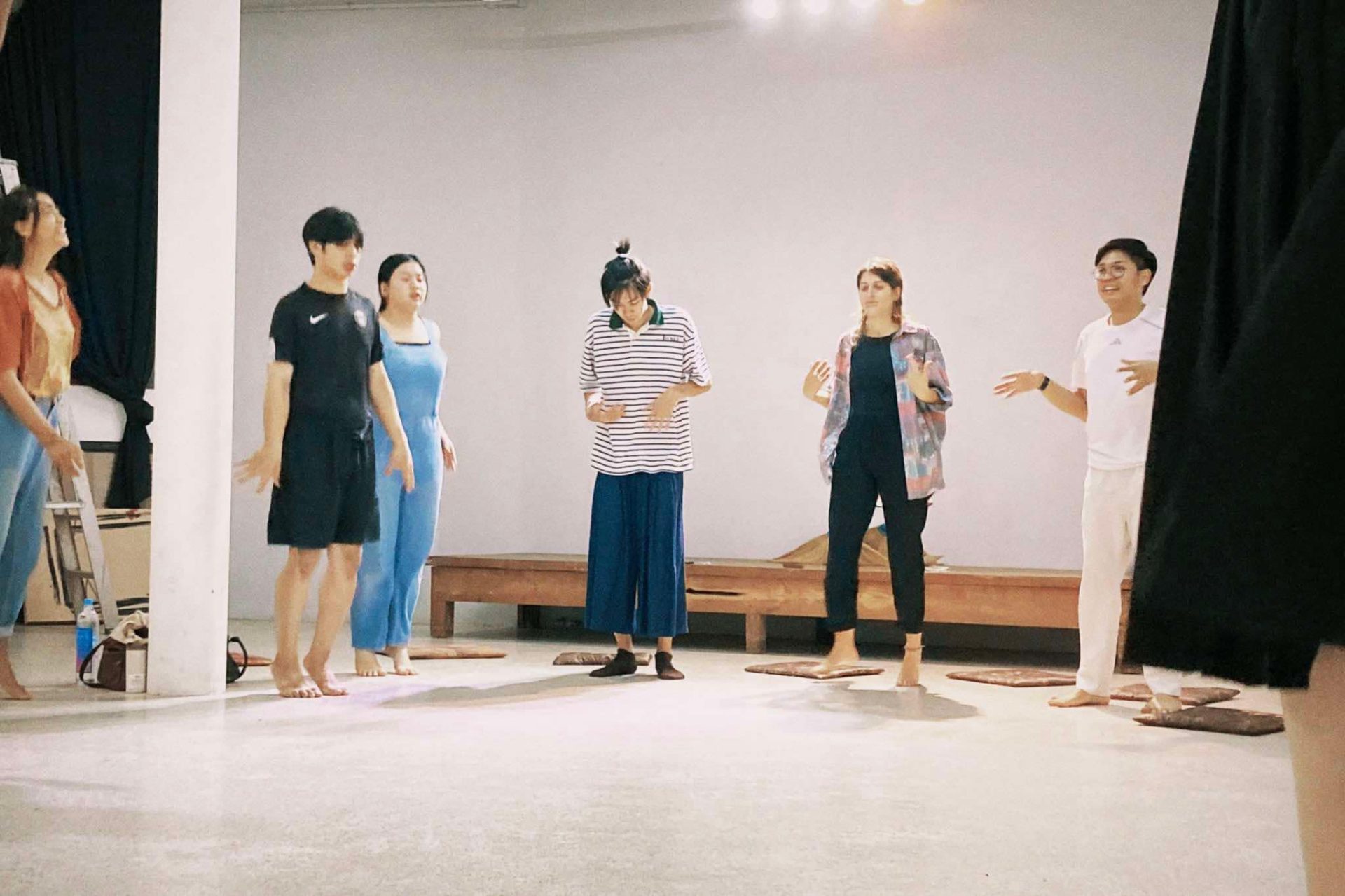
The first workshop took place at Dhepsiri Art Space, a beautiful and welcoming venue during the Chiang Mai Performing Arts Festival. There, I collaborated with the Part Time Theatre group, a local theatre team with an active presence in the community. During the sessions, the participants expressed themselves purely in their own language, while Vasan, a Thai translator and actor from Part Time Theatre, facilitated our communication from start to finish.
In the closing circle, participants mostly shared that although it was their first time attending a non-technical but more “self-awareness” focused workshop, they deeply enjoyed the experimentation, the role-playing, the things they shared, and the process of expressing themselves through the symbolic world of Dramatherapy.
The second workshop was held during the Asian Youth Theatre Festival and the Chiang Mai Festival, events that annually bring together artists from various Asian countries: Malaysia, Indonesia, Japan, the Philippines, Thailand, and others, to exchange knowledge, experiences, techniques, and emotions.
While facilitating, seriously, I felt great awe at witnessing dozens of different worldviews unfold before me, and I started to get a taste of what it truly means to work with a group that carries so many different cultures, languages, and modes of expression.
To keep it brief (since one post could never be enough to reflect on everything I’d like), both workshops turned out to be more than professional experiences. They felt more like small moments of meeting the Other—and myself.
Coming into contact with so many different cultures helped me, as a person and as a Dramatherapy facilitator to focus more deeply on what it means to be truly present, to listen, to learn, to exchange information and feelings not just through words, but also through non-verbal communication—body movements, glances, silences.
I keep the ideas that were shared, the participants’ testimonies, the new encounters, some hugs, the small performances, the looks, the pauses, those tiny “yeses” and “no’s” that helped us all to exist there together, safely.
All these were beautiful.
But.
The Sweet Concerns
Or how I’m learning again through Others
Facilitating workshops for populations carrying different socio-cultural capital from your own is fascinating—but it also comes with risks. I don’t present these risks as something “dangerous” to be avoided, nor is there necessarily a way to avoid them. I see the workshops as a good opportunity to reveal the “behind-the-scenes” part—the perhaps more “human” aspect.
As a Dramatherapy facilitator with an academic background in Social Sciences, I often worry that I might, even unintentionally, misinterpret or impose elements from my own personal and cultural background onto participants. There’s this silent concern following me: that my experiences, positions, or biases might “leak” into the process—either through projection or countertransference.
In my effort to approach the cultures I would interact with respectfully and without imposing my own, I dedicated significant time to reading about Thai society and its recent socio-political developments. “This way I’ll reduce the likelihood of unintentionally transferring elements!”, I thought.
And yet, the more I read, the more the concern lingered—or even intensified:
How can you truly understand the experiences of people from a vastly different cultural and social background just through extensive literature review? Can knowledge, however well-intentioned, bridge the gap of lived experience? What about what is unwritten—about the silences, contradictions, and contexts that don’t fit onto the page?
All this is well and good, but human interaction inherently contains elements of such transfer—strangely comforting, isn’t it? We don’t need much analysis to realize that in every meeting, something of ours enters the space ideally belonging entirely to the Other, and vice versa. We can’t—at least not fully—separate ourselves from the totality of experiences, values, and social frameworks that make us who we are.
And if this challenge is present even within a shared cultural framework, imagine what happens in an intercultural environment!
I soon slowed myself down.
I decided not to try to fill myself with “knowledge.” Besides, I didn’t have enough time left to cover all of Thailand’s history! Instead of obsessively trying to understand everything beforehand, I chose to remind myself simply to remain present during the process.
To try to listen. To attune. To be open to noticing what goes “wrong” and to celebrate what goes “right.”
Fortunately, in my role as a Dramatherapist, I am supported by sociological theories that once shaped me during my years of relentless analysis—and by Dramatherapy itself, which fundamentally urges us to pause thought and surrender a bit more to sensation.
A bit of thought, a bit of feeling—within these frames:
– Austin and/or Foucault remind us that discourse has power. Who speaks, who remains silent? What is said and what is left unsaid? Words themselves carry weight. Just observe, without needing to interpret.
– Butler reminds us that identity is not fixed or immutable but constantly formed through interaction. We are not simply “being”—we are “becoming” again and again, through gestures, glances, silences, what we show and what we withhold. So, in the workshop, we too will “become” something through our exchange. No need to decode or define—who appointed us to do so, anyway?
– Erikson alerts us that it is practically impossible to strip away our cultural filters completely. We can’t prevent all our reactions, but we can observe them as they arise. Perhaps the key is to keep an internal question alive: What am I seeing? And how much of it might be my projection?
– In group settings, Goffman focuses on the individual’s agency: how each person presents themselves—sometimes carefully, sometimes spontaneously, but always in a dialectical relationship with the Other’s gaze. Again: just observe. Emotions, alliances, disagreements, connections—all without a need to interpret.
– Said’s Orientalism serves as a catalyst—not to offer a safe “exit” from a Western gaze, but to keep us vigilant whether simply traveling to or working in Asia.
The danger of seeing the “Other” through exoticizing or paternalistic filters is ever-present. It’s not just an academic notion but a tangible reality whenever a “Westerner” faces a non-Western experience. Again, no clear solution—only ongoing self-observation and acknowledgment of the positionality from which we gaze. Saying, “Maybe what I see isn’t experienced the same way from the other side, maybe it’s partly mine,” might be our best option.
Dramatherapy as a Safer Path
Beyond the above theories, which can guide a more conscious practice, Dramatherapy itself—playful, non-interpretive, and non-directive—”frees our hands” by offering space for constant re-examination of inner needs through symbolic and sensory routes.
In practice, Dramatherapy reminds us that we don’t need to talk incessantly or have all the answers; it’s enough to be willing to be present and allow stories to unfold. Sometimes, playing itself, as a means of exploring internal realities, is enough!
It allows participants (and myself) to experiment with roles, try alternative voices, touch aspects of themselves that often remain sidelined in daily life, seek a bodily sensation when performing an action, and so on.
And within this safe symbolic framework, underlying interpersonal dynamics can be illuminated, transformed—or simply heard—without the pressure of “real causes” or “absolute truths.”
In this sense, there are no final solutions. Nor ways to avoid the inevitable.
Not having clear answers isn’t necessarily a weakness—it might even be a more honest stance in the face of human complexity.
Clearly, we can never fully detach from our cultural roots, nor entirely erase our projections or unconscious patterns. But the point is not sterilization—it is readiness to question ourselves, observe, and remain open to accepting or changing.
After all, no matter how different we may seem, what I realize again and again through my work is how shared the foundations of human existence are.
We all thirst for respect, connection, love, acceptance.
And if something truly unites us, it’s exactly that: the ability, even briefly, to meet and exist together, just as we are.
This, ultimately, is the heart of these encounters.
And this time, it emerged experientially—not just theoretically.
Instead of an Epilogue
I admit that I have rewritten this text forty times trying to avoid sounding preachy, too academic, cheesy, or like another “Western” who traveled and acted in Asia.
Probably, if I keep rereading it, I’ll keep tweaking it.
But just before publishing, I thought: I also wouldn’t want to fall into the other extreme—self-censoring everything out of fear of miss or forget something.
Anyway.
That’s all for today, in a more confessional and philosophical tone.
Without bibliography.
It always feels good to share.
Workshops
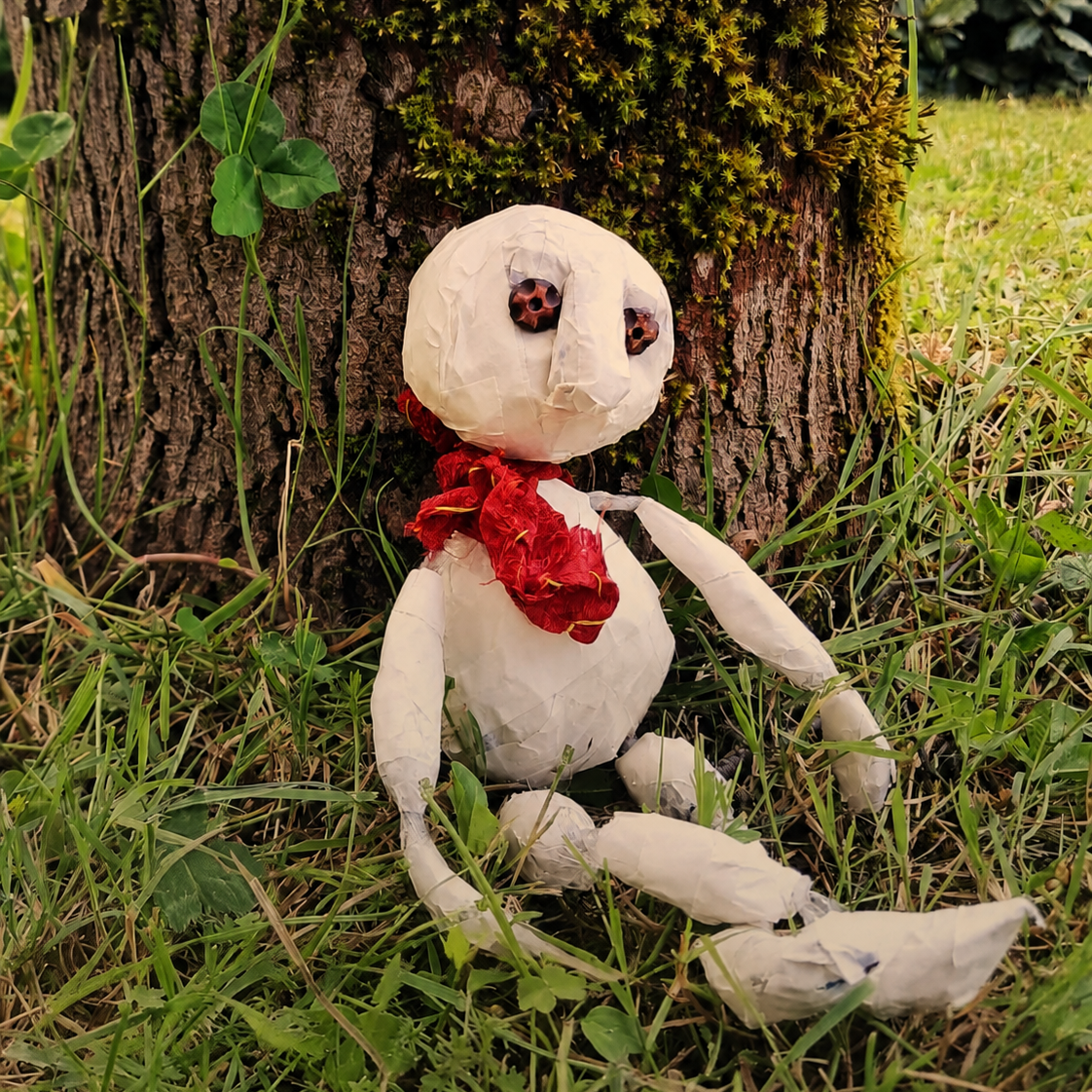
Puppet Making & Dramatherapy Workshop
JUNE, 2026
Valle Gaudia, Monteluro, Italy
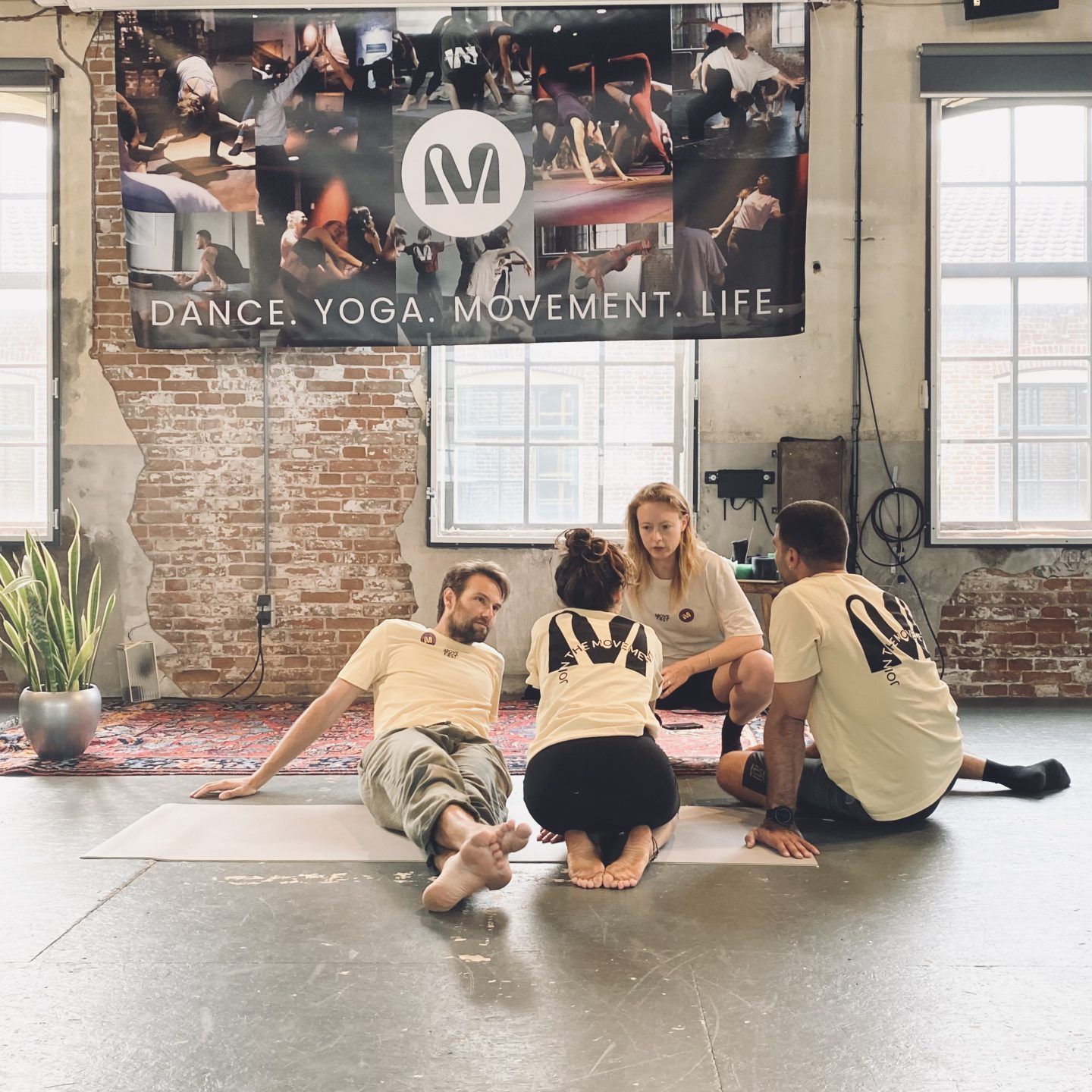
Movefest: non verbal communication workshops
JULY, 2026
MoveFest, Leiden, the Netherlands
The Flying Turtle Project: my rythm
MARCH, 2026
Catgang Acrobatics and More, Nea Philadephia Attica