

Disclaimers
1. On the romanticisation of childhood
This text does not seek to romanticise childhood or present it as a “common“ or necessarily safe experience. It fully acknowledges that there are childhoods marked by deep trauma, insecurity, neglect, or circumstances that are not appropriate for children.
2. On the distinction between experience and understanding
The reference to the child’s way of sensing and experiencing the world does not deny children’s ability to perceive causes, relationships, or emotional states. On the contrary, it refers to the developmental difference between living through an experience and the later cognitive and symbolic processing of that experience.
3. On the “average” child and generalisations
The observations expressed here do not aim to create an image of an “average” child or a universal childhood experience. Rather, they attempt to outline part of a developmental landscape through the form of personal narrative, with full awareness of the many variations, exceptions, and differences that exist.
4. On the therapeutic perspective
Any connection made here with Psychotherapy and Dramatherapy does not suggest that theatrical expression is a panacea or a sufficient response to every traumatic childhood experience. Rather, it suggests that it can be one possible way of renegotiating early experiences within a safe and supportive framework.
The reference to theatrical play here should not be understood as equivalent to the idea of “playing alone or with others in order to heal myself.” There is the kind of play that helps us feel better, and that in itself is valuable, with an immediate impact, though mainly a short-term one. And then there is play as a therapeutic process: play that is followed by reflection and processing; play that allows meaning-making, the negotiation of roles, the emergence and illumination of old or new aspects of the self, and so on. This second form -not better, not worse than the other- carries a different depth and a longer-term impact.
The distinction between the two is important. Activities and hobbies can offer relief and support, but they do not, in themselves, constitute psychotherapy.
5. On the level of language and the intention of the text
This text consciously moves between narrative and theoretical discourse. It does not aspire to function as a detailed developmental or clinical analysis, but rather as a personal and reflective approach that remains in dialogue with lived experience.
—
Oh, childhood
I often think of childhood as a way of being.
I do not remember it with precision, nor through dates and timelines. I remember it through the body. Through the way I once moved without thinking, the way I ran without becoming breathless, the way I fell and got back up without stopping to dwell on the pain, the way I swam in deep waters before I had even realised that I was terribly afraid of the bottom.
Back then, time did not exist. There was only the present moment. And within that present moment, everything could come and alternate: joy, fear, boredom, excitement, anticipation, disappointment, and so much more.
Nothing lasted too long. Nothing was threatened by permanence. Beautiful moments came and went, and difficult ones passed without leaving a trace -not because they were not heavy, but because they had not yet acquired words/recognition.
The body was writing its own story, but I was not yet aware that it was doing so.
Childhood seems to be that stage of life where we first experience things that only later we will understand.
We feel that something brings us joy or causes us pain, without yet being able to place it within a clear structure of cause and effect. Experiences are recorded in the body and in emotion, but their meaning will be shaped later. Much later.
Looking back, perhaps we return to certain moments when the body was showing what the mind was not yet able to process at the time. And perhaps we experience certain things for a second time -or, truly, for the first time.
As children, then, we existed simply **just because we existed**.
And play was our way of getting to know the world.
Actually, it is our way of existing.
We rolled effortlessly down hills of sand, ate half an ice cream and let the other half melt onto our clothes, pretended to be a monkey or a dog or an imaginary creature that had never existed -all these without worrying about being judged.
While we are kids, we improvise, express ourselves, create games, experiment, dare…
Until…
At some point, almost imperceptibly, something shifts.
Without realising it, play begins to change or even to fade. Not suddenly; gradually.
As things begin to acquire meaning and cause-and-effect reasoning takes up more and more space, we learn to speak more and play less. We learn that there are right and wrong ways of moving through the world. That the body, under certain circumstances, must be restrained. That joy needs boundaries or the “correct moment“.
I do not think there is any need to elaborate on which circumstances impose this shift -we know them, and we can imagine them and may differ from case to case -there is not just one specific moment that marks the end of this childhood state.
Even when everything goes “as expected”, carefree childhood eventually comes to an end.
Also.
Maybe you lost your childhood too early because someone pulled the ground from beneath your feet; because you were disappointed, because you were harmed, because you had to take on the role of an adult too soon in order to care for a family member, and so on.
But that moment existed. From being a child, you became “less“ of a child. Or perhaps you were not allowed to remain one.
There is, therefore, a different passage for each of us:
The moment when you used to play for no reason, and then you begin not to play -or to play only if there is a reason.
This transition is not clearly visible, nor is there a precise point when it begins. As we said, there is no exact date.
One day, you simply stop running without a reason.
You stop making noise just for the sake of making noise.
You stop throwing stones into the water simply to watch the ripples.
You stop ringing the neighbours’ doorbells just to play a little prank.
And it is not that you consciously forbid yourself from doing these things.
It is that your life slowly, little by little, becomes more “serious.”
Somehow, without noticing, play is no longer spontaneous.
It becomes a choice.
And in adulthood, every choice needs a cause.
Every cause needs a reason.
Every reason needs a result.
“This is what grown-ups do,” we say.
And we say it with a voice that sounds serious, a voice that frames it as evolution rather than loss.
That is it.
From this point onwards, play needs a justification in order to exist.
Maybe a gathering for board games.
A workshop where someone will teach me how to play.
And if once play was life itself, now, at best, life can occasionally contain a little play.
The body begins to hold itself back.
It no longer knows how to move without being judged, it has to learn this again from scratch.
It no longer knows how to roll around on grass without someone telling it to do so at a week-long retreat.
It no longer knows (or perhaps remembers?) how to express itself simply for the sake of expression.
**Attention**
As we said, the intention here is not to create a romanticised image of childhood.
There are childhoods that do not resemble childhood at all. There are lives that become heavy from a very early age, bodies that learn far too quickly how to be careful, how to endure, how to remain silent.
And yet, even there, the childlike way of experiencing the world existed as a potential that was interrupted -as something that did not have the chance to fully unfold.
Whatever kind of childhood we had -nurtured or neglected, bright or dark, or somewhere in between- we all existed at some point within that stage of childhood experience, even if, due to circumstances, it lasted only for a second.
There was a moment when we simply experienced.
We did not yet “know“.
The impact attached to our childhood, would come later.
—
The Quote
What prompted me to write today was a passage I once read somewhere and later wanted to copy down in my own handwriting, in one of the notebooks where I occasionally collect thoughts, questions, and feelings.
Unfortunately, I did not write down the name of the original source, so I no longer know who wrote it. It seems that I was so carried away by everything the passage stirred in me that I forgot to record it.
[…]When my childhood returns to me sometimes and unsettles my heart, it resembles an image with a golden frame and deep colours, dominated by a forest of plane trees and chestnut trees, an indescribably pleasant light -a morning light- and a background of magnificent mountains. Somewhere nearby, a small patch of blue reveals the presence of the sea.
All those hours of my life that allowed me to feel -if only for a little while- peaceful and to forget the world and its harshness; all those solitary walks I took through beautiful mountains; all those moments when an unexpected happiness or a love without sexual desire carried me far away from yesterday and tomorrow… all of this, I cannot describe with any more precious name unless I compare it to this lush green image of the first years of my life. […]
I thought it could easily have been a passage by Alice Miller. Just as easily, perhaps, by Françoise Dolto. I also thought of Hermann Hesse.
Beyond attributing the quotation properly, out of respect for the person who created it, the reason I would like to find the original source -if there is any additional value in doing so- is because I would like to read what comes next.
In any case.
When I read it again, I found myself lingering on the simplicity it seemed to leave behind.
There were no difficult words, no complex meanings.
And yet, between the letters, a space immediately emerged -one of those strangely beautiful spaces that appear when something touches us deeply, even though we cannot quite explain why.
The link to our thinking world
It is not uncommon for people in therapy to circle around childhood.
Actually, it happens very often.
Through these kinds of journeys back, we encounter ourselves again in carefree moments, unbearable memories, injustices that were never repaired, great surprises that once made our eyes shine, dreams we nurtured every night before falling asleep, shocks that sometimes still wake us in the middle of the night.
And so many other things -“good” and “bad.”
Within those first years of our lives, if we are able to remember them, we can often find many of the reasons that explain why “we” are who “we” are today.
I thought that this quote about the lush green image of childhood is not simply a memory, nor does it need to be understood literally.
Perhaps we were never surrounded by green landscapes at all.
This image seems more like an inner refuge.A place where time has not yet learned how to wound.
Where feelings did not need a thinking reason.
Where loneliness did not necessarily hurt.
Where joy did not need to be formed with words.
You understand where I am taking with this.
During these green days, emotions and needs were usually expressed without logical processing.
They simply existed.
I also thought that perhaps we often return to these landscapes through nostalgia, through a sense of longing or impossibility, but also through need.
Perhaps we return in order to remember that, once upon a time, we existed as whole beings -whatever we were going through and before we understood what we were going through.
We were becoming human beings, almost unaware of what was waiting ahead.
We were whole before we began fragmenting ourselves into anxieties, fears, and expectations.
We were simply “us” before we learned to measure our worth through usefulness.
Before we began counting the marks on our bodies.
Before we realised how fortunate or unfortunate we had been.
Reading the quote, for a moment, I too stood before that lush green image as a child returning without luggage, without explanations, carrying only the quiet certainty that somewhere inside there was, is, and will always be a morning light that does not fade.
—
The Cinematic Link
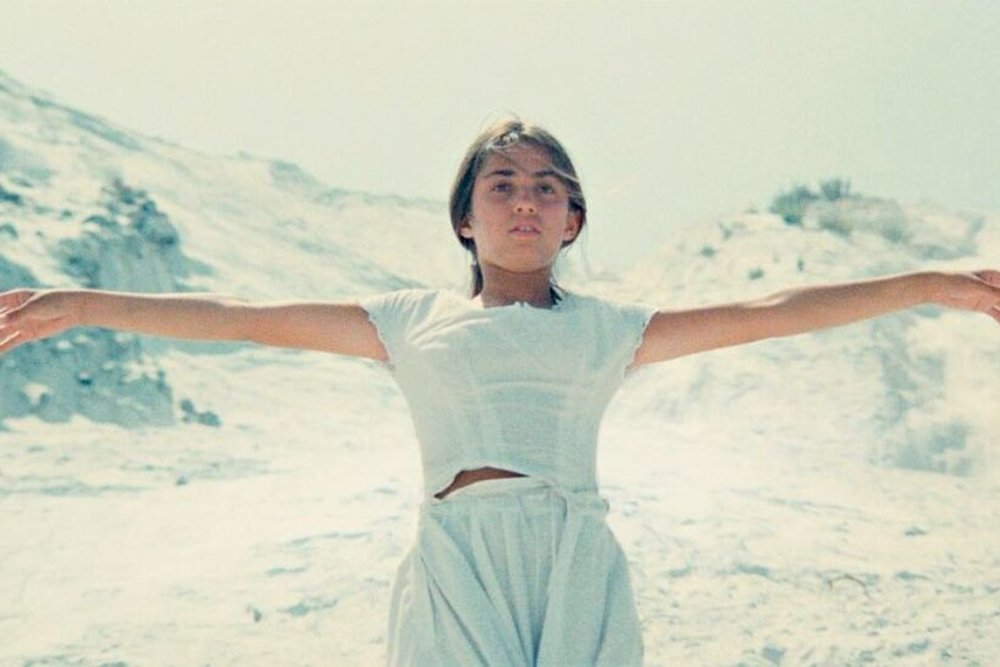
By association, I decided to watch again the final scene from “Kaos“ by the Taviani brothers.
My god, those two speak directly to my heart.
I could not imagine a better audiovisual companion to the quote.
That scene where children run and roll down hills of pumice stone beside the sea.
They play.
They laugh.
They dive.
—
In the place of an outro
Childhood can of course be understood as a developmental period, but also as a fundamental premise of human experience: a pre-reflective stage in which experiences are inscribed in the body and in emotion, before they become objects of mental processing and symbolic representation.
And perhaps, ultimately, what matters most is not to remember “how it was (or might have been) back then,” but to rediscover how it felt to play and to explore freely.
To repeat what we love.
To find that little something we were deprived of.
To try what we were never able to try.
Maybe to speak less and play more.
To allow the body just to exist.
And of course, we can talk afterwards, too. I’m not saying words don’t matter.
Workshops
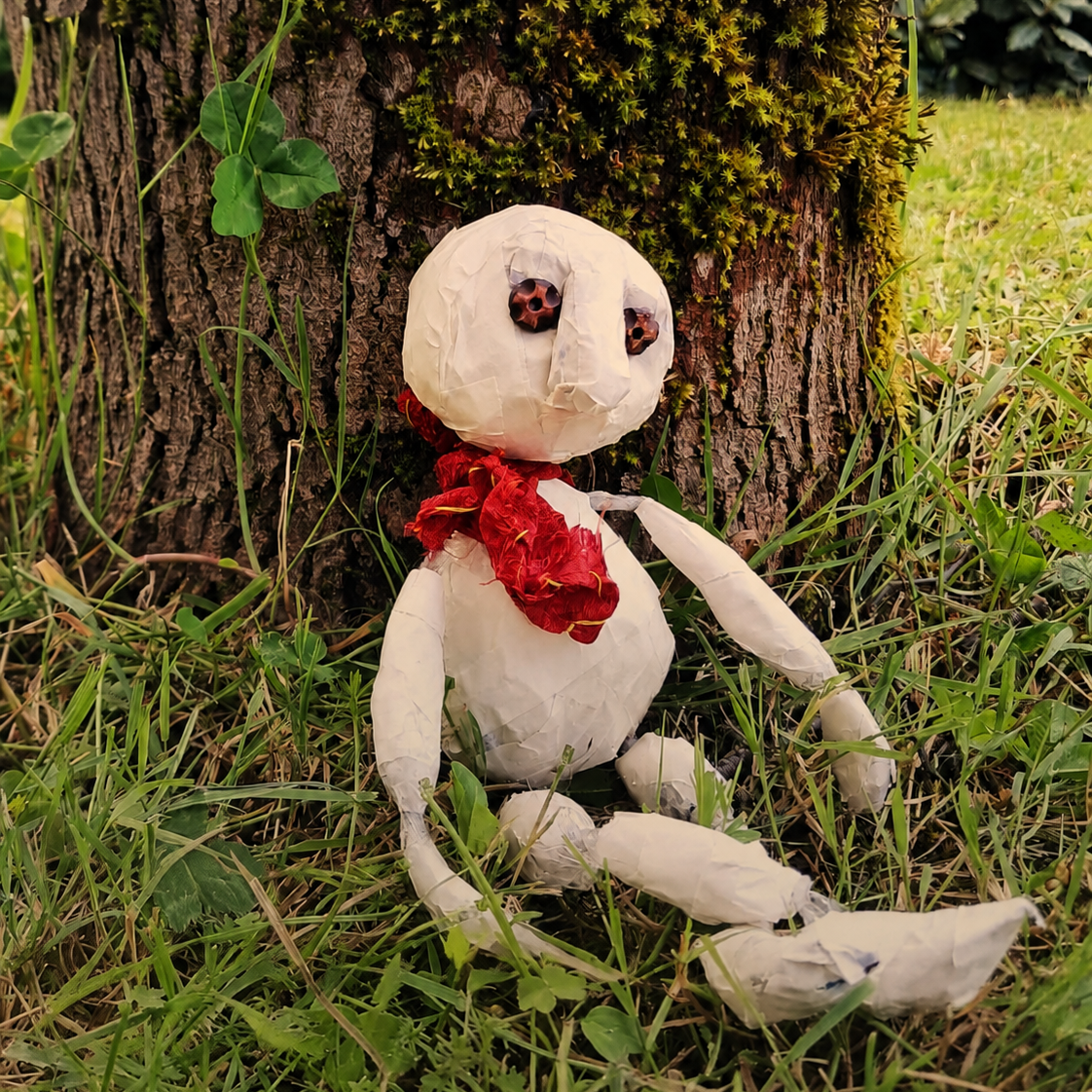
Puppet Making & Dramatherapy Workshop
JUNE, 2026
Valle Gaudia, Monteluro, Italy
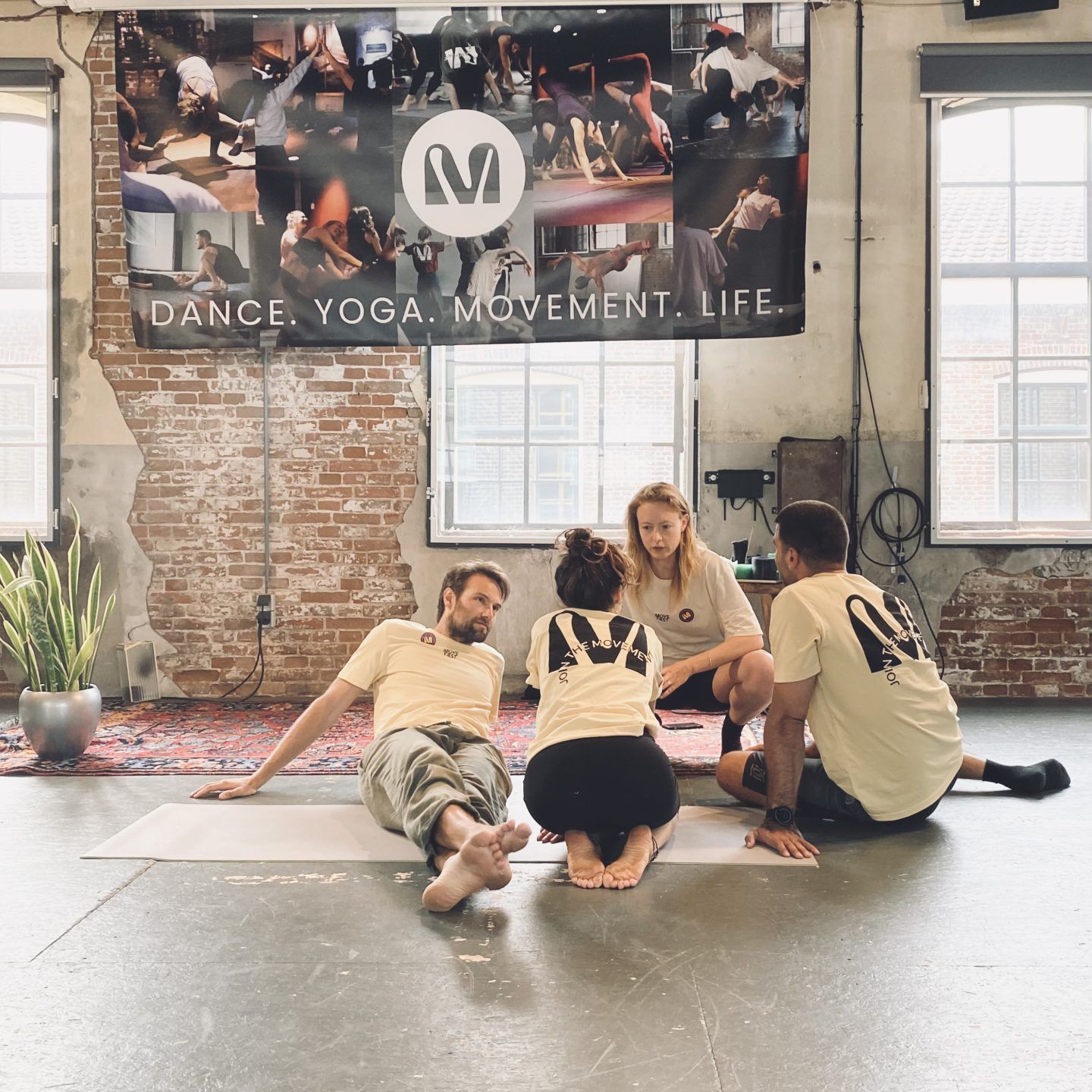
Movefest: non verbal communication workshops
JULY, 2026
MoveFest, Leiden, the Netherlands
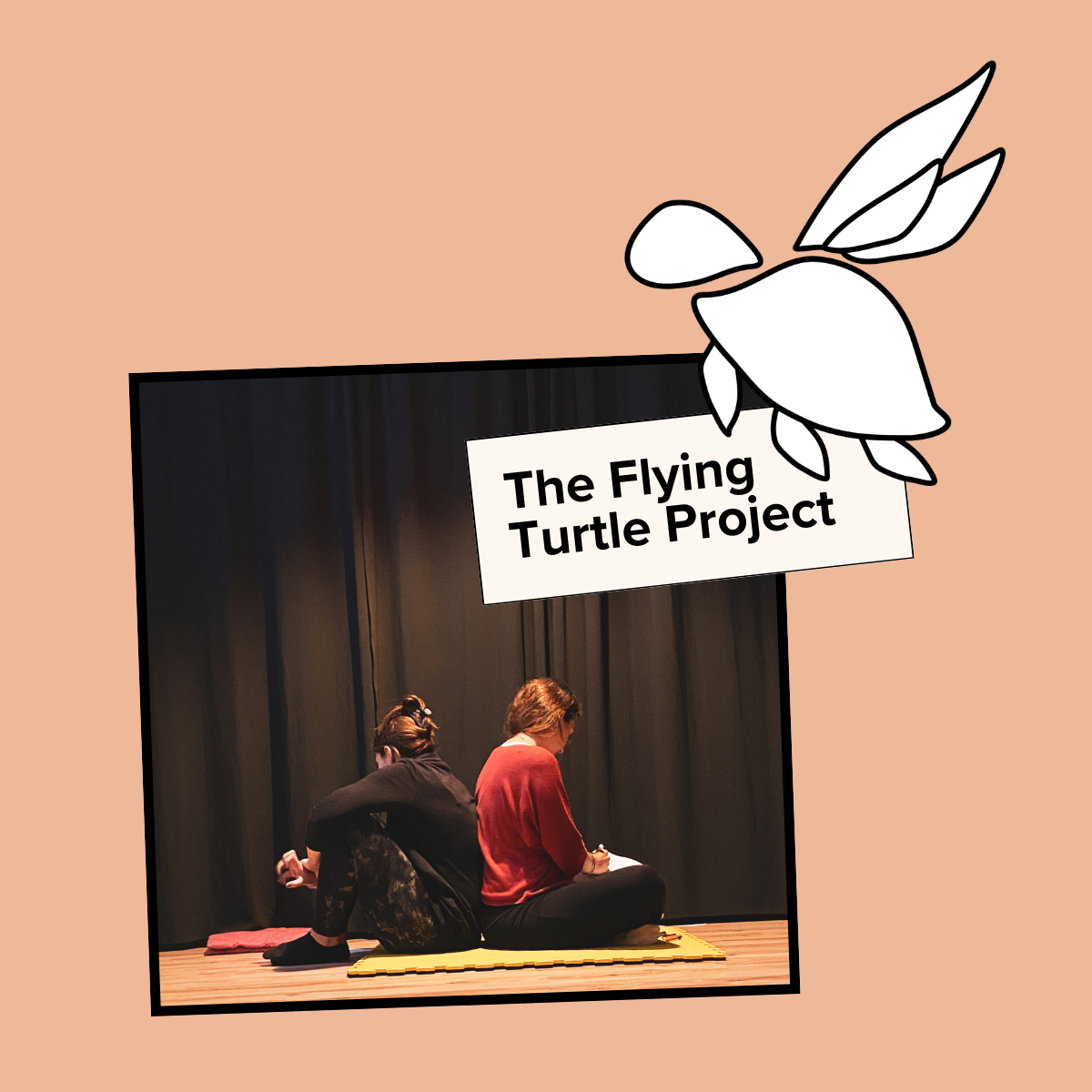
The Flying Turtle Project: my rythm
MARCH, 2026
Catgang Acrobatics and More, Nea Philadephia Attica