

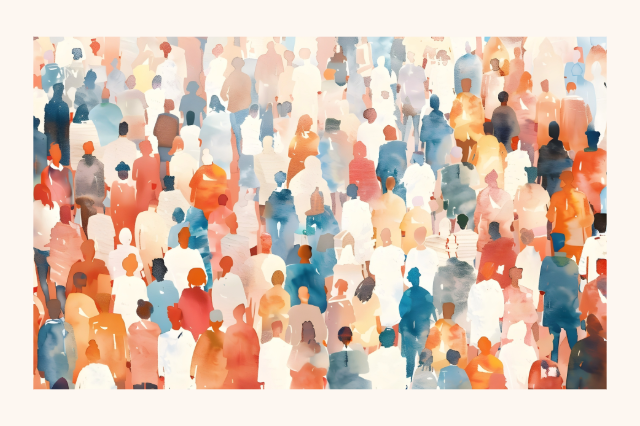
How many times have we worn masks to meet the expectations of others while feeling deep inside that they don’t truly fit us?
How many times have we taken actions or postponed our lives, waiting for the right moment, social acceptance, or an external sign to validate us?
We do what we do, but what and why?
We wait as long as we wait… but what and why?
Social influence and the construction of identity
Social influence shapes our thoughts, emotions, and choices every day. From the moment we are born, we grow up within a network of relationships and values that define and guide us. Social norms, the expectations of those around us, and our need for acceptance significantly impact how we perceive ourselves and the world around us. But to what extent does this “socially correct” align with our true desires as we grow older? And when does social influence turn into a trap?
The psychological dimension of social influence
Carl Jung, the founder of analytical psychology, extensively discussed individual and collective consciousness. According to him, every person is born with a personal unconscious as well as a collective unconscious, which consists of archetypes and social influences that subconsciously affect their decisions. One of his main arguments is that, in order to develop our identity, we must recognize these influences and consciously choose which values and beliefs genuinely suit us, rather than following them blindly or out of habit.
To simplify this concept, we can imagine the collective unconscious as a vast library filled with old stories, symbols, and behavioral patterns inherited from generation to generation. These stories influence us without our awareness—for example, the roles of the “hero” or the “wise one” found in fairy tales and movies often shape our ambitions, actions, and self-perception. When an individual understands these patterns—which are not the same for everyone—they can gain greater awareness of their choices and free themselves from models that do not truly fit them. In other words, they can begin to select which of these patterns to incorporate into their personality and life, and which to discard.
However, the collective unconscious does not only function as a repository of universal and timeless patterns but also as an invisible guide that can steer us without our realizing it. The “conformity” theory of social psychologist Solomon Asch shows that people often adjust their opinions to align with the group, even when they know the majority is wrong.
Asch’s experiment demonstrated that individuals frequently follow the group, even when they recognize its errors. In a simple test, participants were asked to compare lines and identify which one matched the length of another. When alone, they gave the correct answer. However, when other individuals in the room deliberately provided incorrect answers, many participants conformed to the group, despite seeing the mistake. Asch’s experiment highlights the power of social pressure and how it can make us doubt even ourselves. It also illustrates how easily individuality can be lost in a system that rewards conformity.
If, therefore, the archetypal patterns of the collective unconscious are the roots of human thought and behavior, then the social pressure identified by Asch is the mechanism through which these influences manifest and impose themselves in the present.
The traps of the “socially correct”
The desire for acceptance and social integration is not portrayed in this text as something tragic that we must reject. On the contrary, it is recognized as natural and essential for our survival and well-being. However, when social expectations become overly restrictive and lead us to behaviors that do not reflect our “truest” selves, an internal gap, a sense of emptiness, and discomfort emerge.
Many times, we wear masks, suppress desires, and end up waiting… for what?
Postponing our lives until we achieve the “ideal” imposed by society may be one of the greatest illusions. The “right” profession, the “perfect” moment, the “ideal” self-image—these can all trap us in an endless waiting game, where life is consumed in the future rather than experienced in the present.
From expectation to more authentic living: new Dramatherapy group “Waiting for Godot”
However, individual agency, despite the predetermined experiences one may have, is not doomed to remain captive to unconscious mechanisms. On the contrary, human consciousness possesses the ability for self-reflection and critical thinking—tools that can serve as means of liberation from the shackles of conformity.
The conscious choice to question certain social imperatives and recognize our internal values enables us to shape a more authentic identity, independent of “imposed” influences. History has shown that the greatest changes were initiated by individuals who dared to follow their own path despite the pressure of the majority.
Thus, awareness of the collective unconscious and conformity mechanisms is not a cause for pessimism but an opportunity for conscious action and personal growth.
In this context, in March 2025, a Dramatherapy group of 12 weekly sessions will begin, aiming to identify the social forces that constrain us. Drawing inspiration from Samuel Beckett’s iconic play Waiting for Godot, we will create a space to explore these social bonds that hold us captive.
In Waiting for Godot, two wandering figures, Vladimir and Estragon, find themselves in an undefined place, waiting for someone named Godot—without knowing if or when he will arrive. During their wait, they engage in endless conversations, philosophical concerns, and repetitive rituals that reflect the futility of existence and the human need for meaning. However, Godot never comes, leaving them trapped in the illusion of expectation. The play serves as an existential allegory that poses the question:
Are we living our lives waiting for something that may never come?
In this Dramatherapy group, we will examine the social influences that shape our choices and seek ways to free ourselves from unnecessary constraints. Drawing upon Waiting for Godot, we will explore how societal expectations keep us trapped, search for a more authentic version of ourselves, and invite it to express itself.
Bibliography
Jung, C. G. (1959). The archetypes and the collective unconscious (R. F. C. Hull, Trans.). Princeton University Press. (Original work published 1934)
Asch, S. E. (1951). Effects of group pressure upon the modification and distortion of judgments. In H. Guetzkow (Ed.), Groups, leadership, and men (pp. 177-190). Carnegie Press.
Workshops

Puppet Making & Dramatherapy Workshop
JUNE, 2026
Valle Gaudia, Monteluro, Italy
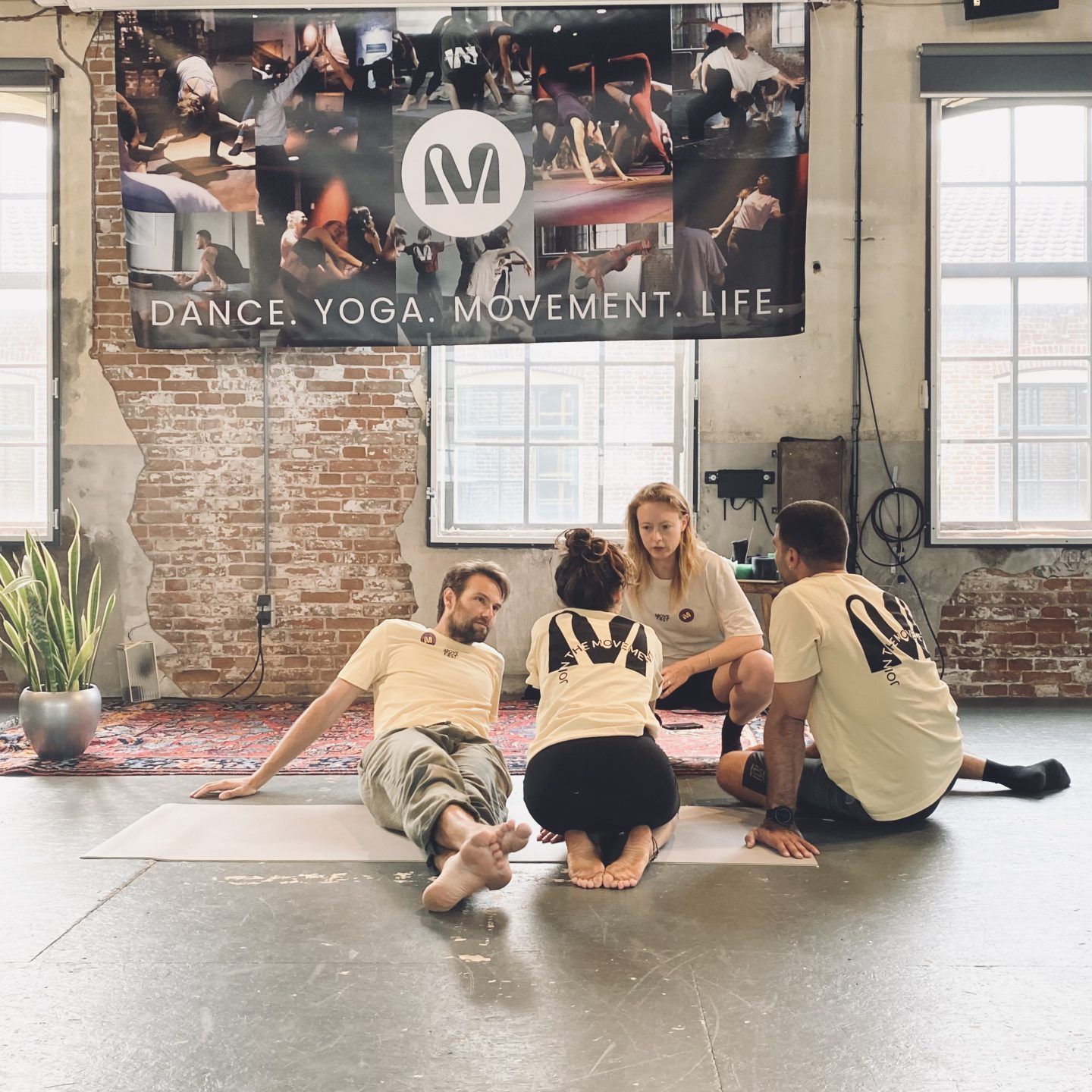
Movefest: non verbal communication workshops
JULY, 2026
MoveFest, Leiden, the Netherlands
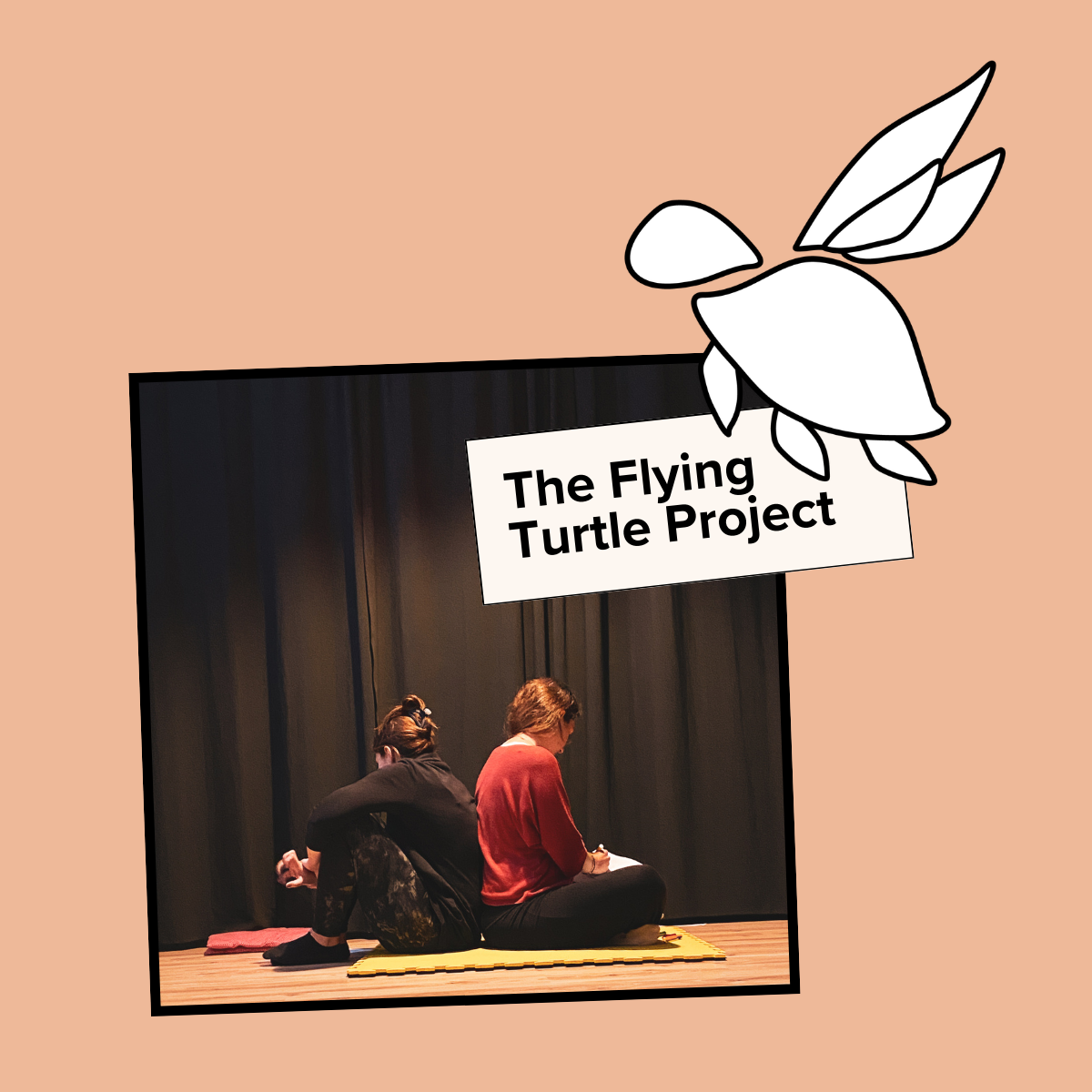
The Flying Turtle Project: my rythm
MARCH, 2026
Catgang Acrobatics and More, Nea Philadephia Attica