


What draws us to the movie theater or compels us to watch a film from the comfort of our couch?
Is it simply our need for entertainment?
An escape from reality?
Or is there something deeper at play?
The Experience of Cinematic Viewing: Filmic and Dreamlike State
For Christian Metz, cinema is not just a form of entertainment—it is also a mirror of our soul, a window into our inner world. The film theorist, through his study of psychoanalysis and cinema, highlights that the cinematic experience functions in a way that is similar to a dream.
When we watch a film, we temporarily leave behind reality and enter a world where our emotions, memories, and unconscious thoughts are activated. We find ourselves in a state of passive participation, where we recognize and project our own identifications onto characters and narratives, much like we do in our dreams. Through this filmic condition, we are given the opportunity to experience fantasies and repressed desires without consequences—cinema becomes a safe space where we can “live” through scenes that we might never dare to or be able to experience in real life.
Dreams and Cinema: Similarities and Differences
During a film, our mind operates differently than it does in everyday life. As we become absorbed in the story, the distinction between reality and fantasy becomes even more fluid.
However, there is a key difference: in dreams, our psychic defenses are lowered, allowing even the most unconscious desires to emerge freely. In contrast, when we watch a film, even if we are deeply immersed in its flow, a part of us remains alert, filtering and processing what we see. In other words, there is always a mechanism that keeps us “awake” on some level, preventing a complete detachment from reality.
This mechanism becomes even more evident when we encounter scenes that trigger intense emotions: sometimes we identify with them, sometimes we distance ourselves, and sometimes we even reject what we see. The same occurs when a film adaptation of our favorite book does not meet our expectations—because our personal imagination clashes with the director’s vision.
The Film as a Personal Experience
Have you ever noticed that some films change your perspective for a few seconds, minutes, hours… days, months, or even years?
Have you ever been disappointed by a sequel because the story took a turn that felt wrong?
Why does this happen? Why do we sometimes disagree with friends who recommend a movie as a “masterpiece,” only for us to find it dull within the first 10 minutes?
Some films make us think differently, reconsider our beliefs, or identify so strongly with a character or situation that they temporarily alter our perception of the world. These are the films that move us, shake us, and make us feel something entirely new.
But why does this happen?
Because some narratives activate deep existential questions that already concern us.
Because a character might embody an internal conflict or desire—or even contradict one.
Because the music, cinematography, and editing—the entire language of cinema—subconsciously influence our emotional state.
Because cinema functions as a form of therapy, allowing us to process unresolved emotions in a symbolic, safe space.
Disappointment from a sequel is not random, too. It’s not just that our expectations were high—it’s that the first film had already been mentally “recorded” in a specific way within us.
The first viewing of a film is a primary experience, during which we form a personal relationship with the story, characters, and emotions it evokes. A sequel negotiates this relationship, and if it does not align with our internal representation, we feel that something has been lost—that the “magic” is gone.
Did changes in the characters disrupt our identification with them?
Did the story take a direction that contradicted our needs and expectations?
Did the sequel feel like a forced repetition of the first film, stripping it of the originality and emotional power it once had?
Cinema as a Personal and Collective Experience
So, cinema is not just images and sound—it is an entirely subjective experience, yet at the same time, a shared one. When we watch a film, we don’t all see the same movie—each of us sees a reflection of our own world projected onto the screen.
Perhaps, in the end, we don’t go to the movies just to watch a story. Maybe we go to experience another version of ourselves through the stories of others.
Our relationship with a film is a dance between identification and distance. The more deeply a film affects us, the more intense the experience—yet we never completely forget that it is “just a story.” A film has the power to evoke strong emotions, resurface memories, and activate unconscious desires. If the storytelling is masterfully crafted, it bypasses our defenses and touches us deeply.
The Cinema in Therapy: The Cinedramatic Method
The magic of cinema lies in its ability to transport us to other worlds, move us, and make us feel experiences that, even though we know they aren’t real, still have the power to affect us as if they were. This interplay between reality and fantasy is precisely what makes cinema a unique tool in therapeutic processes, as seen in Dramatherapy and the Cinedramatic method.
The Cinedramatic method utilizes the power of cinema as a tool for self-awareness and therapy. It is an approach that combines Dramatherapy with the experience of watching and creating films.
In cinema, stories, characters, and images function as “mirrors” of our inner world. The Cinedramatic method harnesses this reflection to help us explore our emotions, recognize deeper desires, and work through personal experiences that might be difficult to express otherwise.
Through this process, we can either identify with characters and narratives or create our own cinematic stories. This therapeutic tool offers a safe, symbolic, and creative way to express our inner world.
How the Cinedramatic Method Works
The Cinedramatic method may include:
- Viewing films or scenes, followed by discussions on the emotions they evoke.
- Reenactment of scenes using dramatherapy techniques, allowing participants to “step into” the narrative.
- Creation of personal stories through short films or improvisations.
- Exploration of the personal cinematic unconscious, since the films that resonate with us often connect to our inner themes.
This method can be used in both individual and group therapy, offering a creative, therapeutic, and transformative form of self-expression.
What About You?
Which films have changed—even briefly—the way you see life? Which cinematic characters have become part of your personal story? How many times have you watched a movie and felt like it was speaking directly to you?
Cinema is more than just storytelling. Perhaps it is a way to rediscover ourselves through the stories of others.
*All above, personal thoughts were drawn from Christian Metz’s book “The Imaginary Signifier: Psychoanalysis and the Cinema“.
Workshops

Puppet Making & Dramatherapy Workshop
JUNE, 2026
Valle Gaudia, Monteluro, Italy
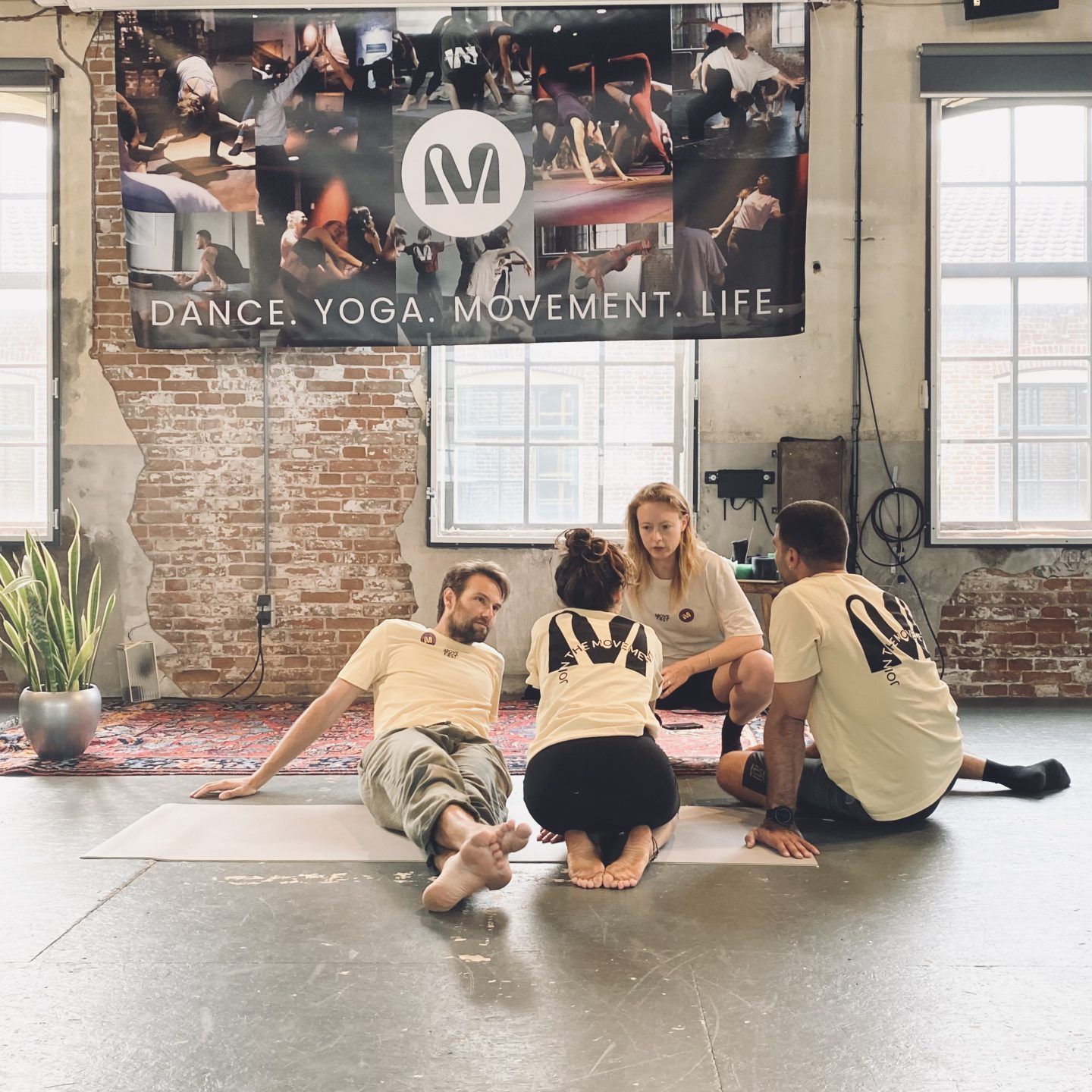
Movefest: non verbal communication workshops
JULY, 2026
MoveFest, Leiden, the Netherlands

The Flying Turtle Project: my rythm
MARCH, 2026
Catgang Acrobatics and More, Nea Philadephia Attica