

How often do I save a post on Instagram or click “interested” on Facebook?
Do I truly care about everything I save?
If I save an average of 10 articles/workshops/events a week, how many do I actually read and how many do I participate in?
In recent years, an interesting discrepancy has been observed in the digital world: many of us save posts, workshops, and other information that seem attractive or useful, but few of us take the next step—action. This phenomenon is increasingly reinforced by social media, where the speed and abundance of stimuli create an environment of continuous distraction. As Bauman (2000) points out, in our “liquid” society, we have many choices but simultaneously struggle to commit to any of them. Saving content without taking action is an expression of this fluidity, where possibilities seem endless, yet actual decisions and commitments are disproportionately fewer.
The question that arises is this: why do we save content and ultimately not delve deeper or act? Does the act of saving itself offer us an illusion of completion, a voyeuristic position towards the world and events? Perhaps the fact that we have saved something gives us the feeling that “we did something,” even if that “something” is limited to intention rather than action.
The Information Age: A Blessing or a Curse?
We live in an age where information flows uncontrollably, and everyone has access to a plethora of sources for anything. This information overload (in another article, we will also discuss hyper-replenishment), while offering immense possibilities, also creates new kinds of problems. Many of us often feel overwhelmed by the vast amount of information available to us daily, and the act of saving can be seen as a new defense mechanism. In this way, we maintain control over information without needing to process it immediately. Han (2015) argues that the continuous flow of information does not lead to substantial knowledge or action but to a consumerist “simulated world,” where the act of saving may reflect just that: a shallow interaction with the information itself.
As information multiplies, I assume that the pressure to keep up with and engage in everything increases. Saving a workshop, an interview, or a post becomes something like “virtual commitment.” But in reality, how committed are we to these interests?
Psychological and Social Factors
Of course, not everything is so simple. There are certainly cases where people do not take action for practical reasons: financial constraints, lack of time, or unforeseen factors such as travel or other personal commitments. Also, psychological readiness for specific activities, such as a psychotherapy workshop, is not always given. It is not uncommon, therefore, to save a workshop with the intention of attending it when we feel ready. If we continue to analyze the issue through the lenses of psychology, the equation becomes even more complicated (the analysis in a future article).
However, this phenomenon is not limited to practical difficulties. It also relates to a broader social trend: procrastination. Procrastination is not a simple issue of neglect but often a form of coping with the anxiety caused by information overload and obligations. The constant exposure to a multitude of choices, suggestions, and commitments may lead us to hesitate to take on additional commitments, resulting in a systematic postponement of our participation in activities we find interesting. Turkle (2011), studying the effects of technology on human relationships, argues that our digital lives often lead to a disconnection from real social and psychological connections, while the countless choices and constant searching cause a kind of “digital exhaustion,” which often leads to procrastination.
The Illusions of Social Networking
Perhaps the most interesting aspect is our personal relationship with social media and content saving. A simple “click” or “tap” gives us a momentary feeling that we are engaging with our interests, while in reality, our commitment stops there. This process may comfort us, as it allows us to feel that we are keeping in touch with the topics that interest us, without needing to ultimately read a saved article or participate in a seminar.
We therefore observe a new form of interaction with information: “superficial participation.” Saving becomes the new way of “imaginary experience,” but without our actual presence in things—paradoxical? This also highlights a broader issue: the distancing from our true interests. The constant presence of information creates a sense of pressure to stay informed, but often leads us to lose focus on our essential priorities.
The Call to Action
Ultimately, the question remains: how can we transform this superficial commitment into meaningful action? A good starting point could be to reassess our interests and set priorities. We don’t need to force ourselves to engage with everything we find interesting, but rather we can carefully choose what suits us best and invest real time and energy into those.
Yes, saving is a first step, but the essence lies in the movement that follows. After all, real experiences are created through action and not just through gathering information. So, the next time we save something, whether we use it or not, it might be good to ask ourselves: “Am I really ready to take the next step?”
Bibliography
Bauman, Z. (2000). *Liquid modernity*. Polity Press.
Han, B.-C. (2015). *The burnout society* (E. D. B. K. E. C. M. W. (Trans.)). Stanford University Press. (Original work published 2010)
Turkle, S. (2011). *Alone together: Why we expect more from technology and less from each other*. Basic Books.
Workshops

Puppet Making & Dramatherapy Workshop
JUNE, 2026
Valle Gaudia, Monteluro, Italy
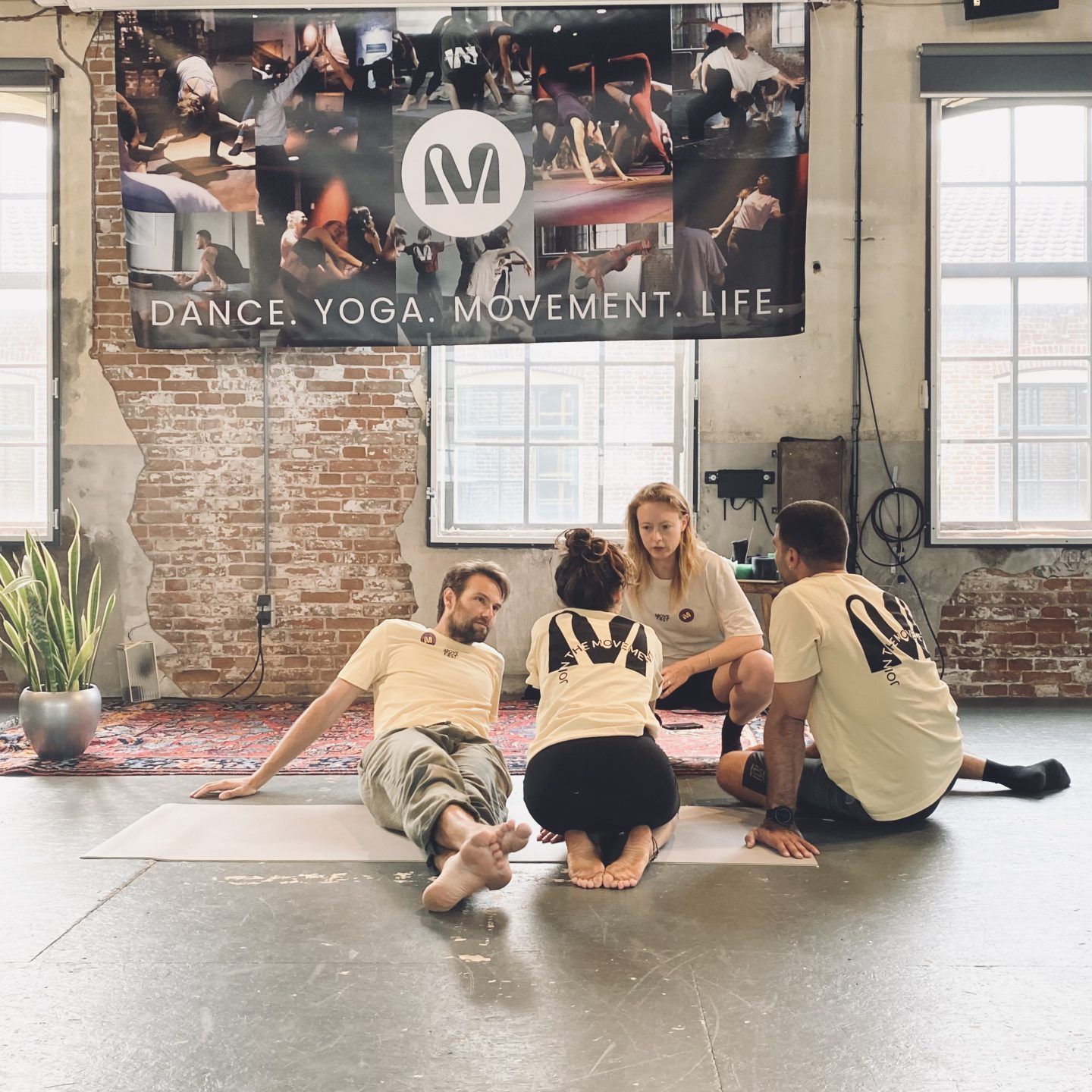
Movefest: non verbal communication workshops
JULY, 2026
MoveFest, Leiden, the Netherlands
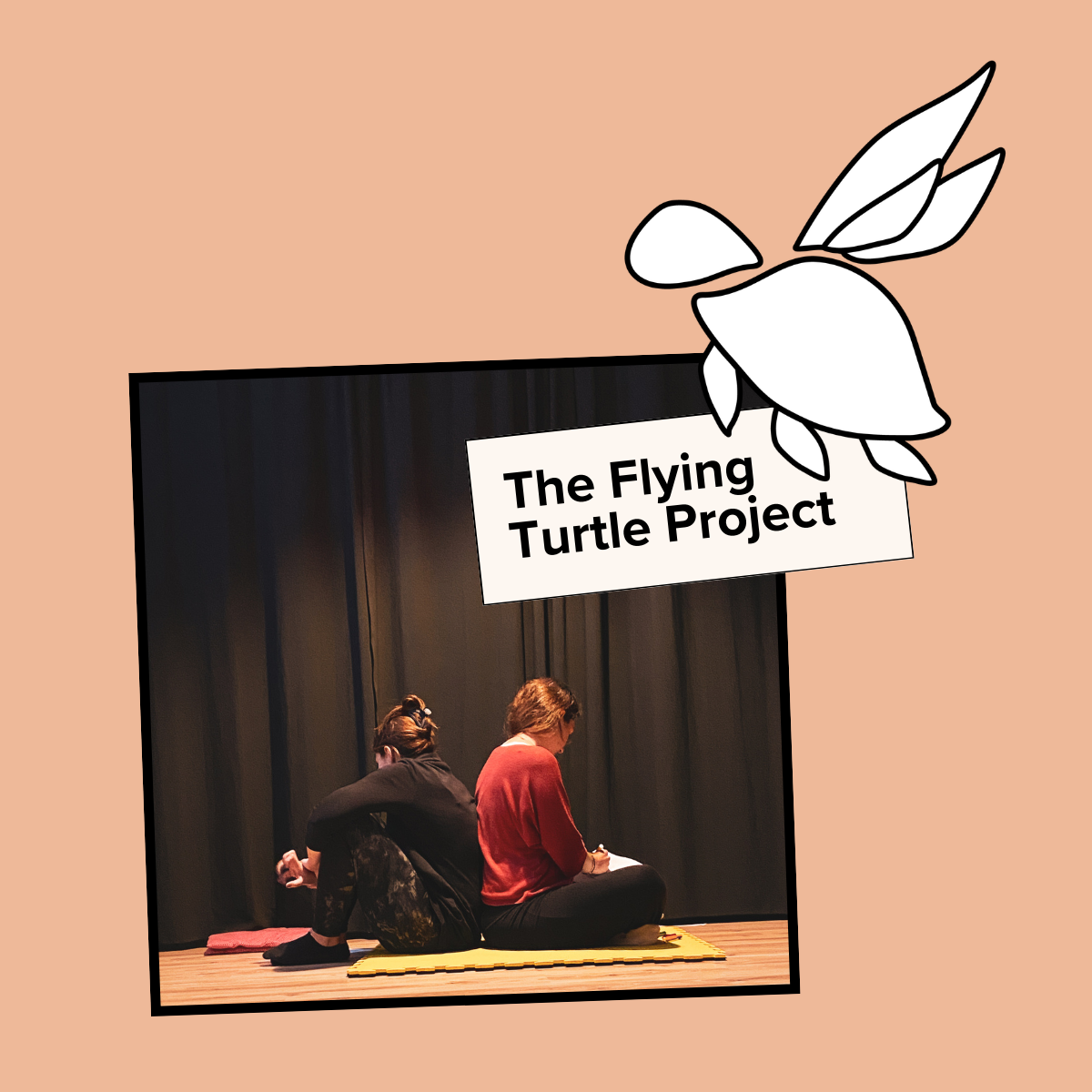
The Flying Turtle Project: my rythm
MARCH, 2026
Catgang Acrobatics and More, Nea Philadephia Attica