

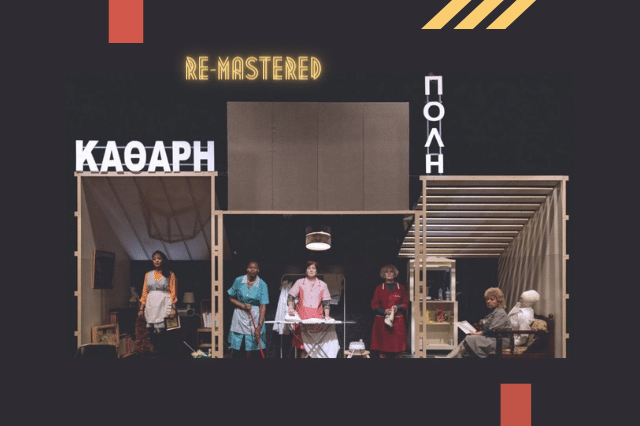
In the context of the broader discussion about the benefits of theater for individuals’ mental health, the example of the Documentary Theater form, which draws exclusively from the experiences of amateur actors, constitutes, if nothing else, a significant area of research that can lead to various theatrical, sociological, and psychological findings.
Participation in performances of this form often gives participants the opportunity to present their stories on stage, to process and reflect on them—the theatrical stage acts as a platform for their experiences to be heard and recognized. In this way, Documentary Theater not only serves as an artistic medium but also as a potentially therapeutic tool that can function as a reparative experience, enhancing self-awareness, emotional balance, and more.
What happens, however, in cases where the same narratives/experiences are repeatedly presented on stage?
At the 11th Online Seminar “Individual and Collective Trauma in Psychotherapy” organized by the National Society of Psychotherapy Greece, I was preoccupied with a series of questions that emerged during my involvement with my thesis titled “The Reception of the Performance ‘Clean City’ by Anestis Azas and Prodromos Tsinikoris: A Case Study.” My research was conducted as part of my Master’s in Human Rights and was funded by the Japanese SYLFF Foundation.
The Performance “Clean City”
The performance “Clean City” premiered on February 3, 2016, at the Onassis Foundation Stegi and is a co-production of the Stegi with the Sirenos International Festival (Vilnius, Lithuania), Teatro Maria Matos (Lisbon, Portugal), and the Tiger Dublin Fringe (Dublin, Ireland), within the framework of the EUROPOLY project of the European Goethe Institutes. After its initial presentation, it toured 39 cities across Europe and Dubai, becoming one of the most significant Greek performances in the Documentary Theater form.
Directors Anestis Azas and Prodromos Tsinikoris decided to respond to the then-popular Golden Dawn slogan “cleanse the place” with a literal approach: they focused the public and theatrical interest on five migrant domestic workers who literally clean the place while also facing the racism and sexism of Greek society. They base the theoretical foundation of “Clean City” on the theoretical work of Gayatri Chakravorty Spivak (2015) and her text “Can the Subaltern Speak?”, books on the history of migration in Greece, the work of Vasilis Tsiamos, and field research in migrant communities and organizations in Athens.
Drawing from Documentary Theater, the directors let the protagonists speak for themselves about their experiences, and the performance toured abroad for five years, attracting the interest of many viewers and theater critics.
The Research
Five years after the initial screening of “Clean City,” in the spring of 2021, the amateur protagonists spoke with me and shared their experiences gained from the extensive tour of “Clean City.”
Their references, as revealed from our conversations, highlight themes such as personal and social recognition, strengthening social relationships, visibility and validation of their experiences, improvement in their lives/daily routines, as well as feelings like excitement for taking on the role of actors, gratitude for group dynamics, dissatisfaction due to ill-intentioned journalistic coverage, etc. They also mention that they developed very personal relationships, both among the five of them and with the directors, for whom they express great appreciation and note that they still have a very close and comfortable relationship with the two directors, characterized by courtesy, care, and mutual respect.
They overall emphasize that, through “Clean City,” they had the opportunity to work legally as actors, to speak publicly, to share their experiences, to travel across Europe through the tour, and to gain respect and appreciation from their close circles as well as from the wider audience that watched them.
And the historical reality is that the five women wanted to speak, and they spoke. And those of us who attended the screenings paid for our tickets to hear them. And we heard them.
From a more theoretical perspective, “Clean City” seems to represent, for all of them, a pursuit of recognition, a means of securing respect and appreciation that functioned as a means of visibility for their experiences as well as a means of legitimizing their rights. Thus, the once-hidden experiences of the five women were publicly offered and attracted the attention of critics, viewers, and academics—including my own.
Post-Research Reflections
The public dialogue opened by “Clean City” and the dynamic interaction of the protagonists with the directors, according to the five women, served as a reparative experience in the invisibility of their experiences and contributed to the development of their self-confidence, self-respect, and self-esteem. Using Honneth’s (1996) terms, the protagonists gained recognition, and their daily lives improved qualitatively, while on an interpersonal level, “Clean City” appears to have also served as a field for the development of friendships, which were fostered through the mutual respect present in the meetings of the production team.
However, speaking with them, I observed that all the protagonists, without exception, mentioned having significant stress from exposure throughout the tour and found it quite challenging to repeatedly go on stage to tell their stories, as they explained, “we are not actors after all”! Of course, this is entirely expected and in no way attributed as a responsibility to the directors. In this text, it is mentioned as a form of “collateral damage.”
Observing their testimonies this time through the lenses of Drama Therapy, I began to wonder what it means to repeatedly expose traumatic experiences and, in this specific case, for the five protagonists who performed their own selves on so many theatrical stages:
- Can a traumatic experience be transformed through theatrical involvement, and if so, how?
- Can Documentary Theater and the presentation of traumatic experiences on stage contribute to the relief of the narrating subjects?
- Can trauma be redefined in a way that does not paralyze or immobilize, and what information can we ultimately gain regarding the application of drama therapeutic techniques in sessions with traumatized subjects?
- In the case of population displacement, for example, how can the significance of “travel” acquire different meanings depending on the subject narrating and the conditions and timing of the narration?
- Would distancing the actors using pseudonyms help? Or would it undermine the social and political character inherent in the Documentary Theater form?
Although answers to these questions may vary and cannot be fixed or unique, they are problematic issues that sparked my research interest, which I utilized in the 11th Online Seminar “Individual and Collective Trauma in Psychotherapy.”
Discussion at the 11th Online Seminar “Individual and Collective Trauma in Psychotherapy” and the Drama Therapy Proposal
The case of repeatedly dramatizing an experience could constitute a serious issue with many potential implications. However, no issue has power if it is not proposed, even at an experimental level, as an alternative proposal. My personal position and proposal concern the application of Drama Therapy techniques in the preparatory stage of a Documentary Theater performance.
We theoretically know that Drama Therapy invites involved individuals to experiment with many different roles. In reality, as Drama Therapist Robert Landy (1993) notes, the more roles an individual tries to play, the more ready they are for their social interactions. We also know that Drama Therapy utilizes the symbolic space between reality and imagination to invite individuals to experiment safely, distancing themselves from their own selves (Jennings, 2005).
Therefore, I propose that applying Drama Therapy techniques in Documentary Theater can be a useful tool that helps amateurs to enter their roles more smoothly and safely, especially when portraying versions of their own selves. The method of Drama Therapy, after all, harnesses the power of drama and theatrical techniques to support and develop emotional expression, self-awareness, and understanding of one or more experiences. Non-professional actors might be able to explore their experiences and feelings in a structured but creative environment, within the intermediate, symbolic space created by Drama Therapy.
After my interviews with the five women from “Clean City,” I argue that drama therapeutic preparation can significantly contribute to building self-confidence and reducing performance anxiety, benefiting the amateur participants each time they are exposed. Through activities like role-playing, narration, and improvisation, actors may better understand and evaluate their prior experiences and process them safely before presenting them to the wider audience.
Bibliography
Jennings, S. (2005). Introduction to Drama Therapy: Therapeutic Theater – Ariadne’s Thread.
Honneth, A. (1996). The Struggle for Recognition: The Moral Grammar of Social Conflicts. Great Britain: MIT Press.
Landy, R. J. (1993). Persona and Performance: The Meaning of Role in Drama, Therapy, and Everyday Life. Guilford Press.
Spivak, G. C. (2015). Can the Subaltern Speak in Williams, P., & Chrisman, L. (Eds.), Colonial Discourse and Post-Colonial Theory: A Reader. Routledge.
Workshops

Puppet Making & Dramatherapy Workshop
JUNE, 2026
Valle Gaudia, Monteluro, Italy
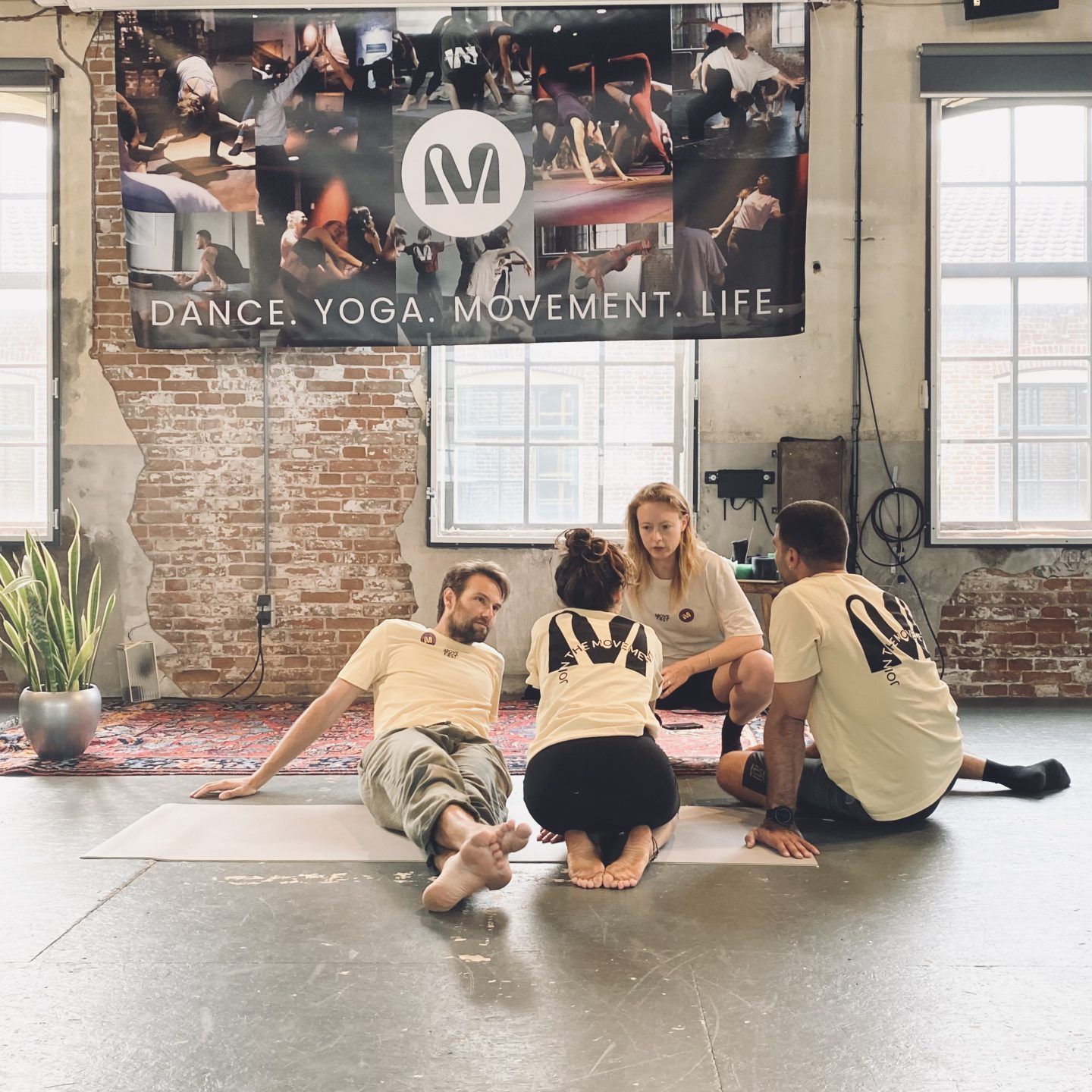
Movefest: non verbal communication workshops
JULY, 2026
MoveFest, Leiden, the Netherlands

The Flying Turtle Project: my rythm
MARCH, 2026
Catgang Acrobatics and More, Nea Philadephia Attica